
Supporting Your Child When They Come Out: A Parent's Guide
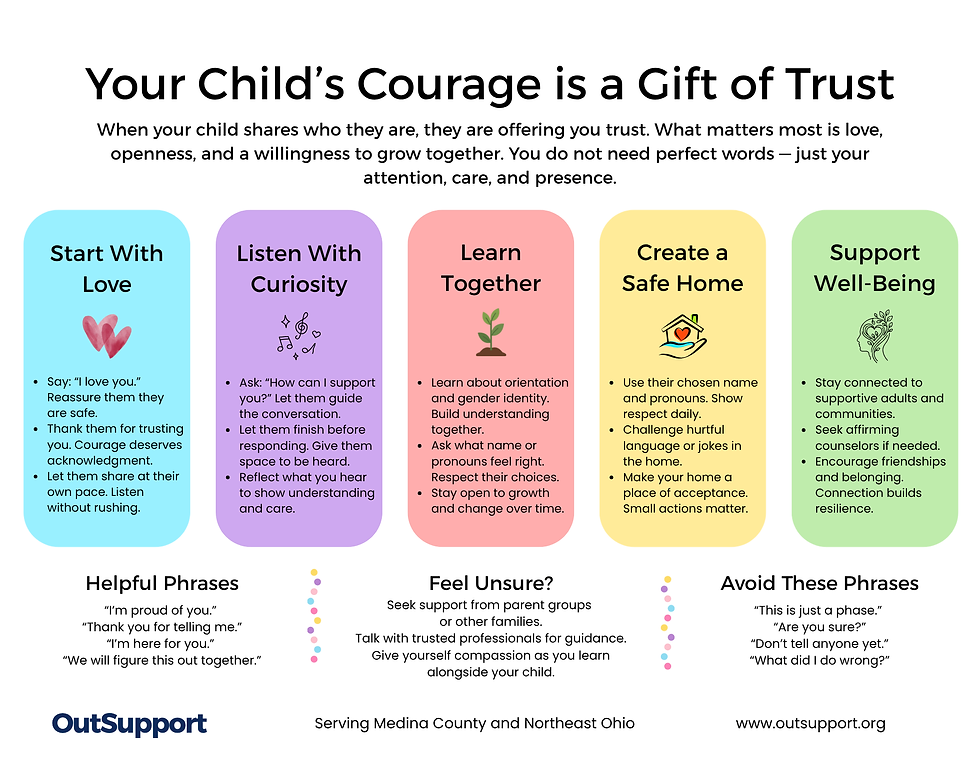
When your child comes out, it can be a moment filled with many emotions—surprise, pride, confusion, or even worry. How you respond matters deeply. Your support can shape their confidence and well-being for years to come. This guide offers clear, practical steps to help you navigate this important moment with love and understanding.
Listen and Stay Calm
The first thing to do is listen carefully. Your child has chosen to share something very personal. Show that you respect their courage by giving them your full attention. Avoid interrupting or reacting with shock. Instead, use calm, open body language and words like:
“Thank you for trusting me.”
“I want to understand how you feel.”
“I’m here to support you.”
This approach helps your child feel safe and valued, which is crucial for their emotional health.
Educate Yourself
Many parents feel unsure because they lack information about sexual orientation or gender identity. Take time to learn from reliable sources. Understanding terms and experiences can reduce fear and misconceptions. For example, reading books or visiting websites from LGBTQ+ organizations can provide insight into what your child might be going through.
Knowing more helps you respond with empathy and avoid unintentionally hurtful comments. It also prepares you to answer questions your child or others might have.
Offer Unconditional Love and Support
Your child needs to know your love does not change. Express this clearly. Say things like:
“I love you no matter what.”
“You are still the same person to me.”
“I want to help you be happy.”
Support can also mean helping your child find community resources, such as support groups or counseling, where they can connect with others who share their experiences.
Respect Their Privacy and Timing
Coming out is a personal journey. Your child may want to share their identity with others at their own pace. Respect their choices about who to tell and when. Avoid sharing this information without their permission, even with close family members.
This respect builds trust and shows that you honor their autonomy.
Prepare for Challenges Together
Unfortunately, your child might face discrimination or misunderstanding from others. Talk openly about these possibilities and how to handle them. Role-playing responses or discussing safe spaces can empower your child.
You can also advocate for them at school or in the community to create a more accepting environment.
Take Care of Yourself
Supporting your child can bring up your own feelings and questions. It’s okay to seek support for yourself through counseling or parent groups. This helps you stay strong and present for your child.
Comments